
 Why dry stone walls are more than field boundaries, and how a small number of wallers keep an ancient skill alive in the uplands.
The Village Blacksmith Today: Forging a Place in Modern Rural Life
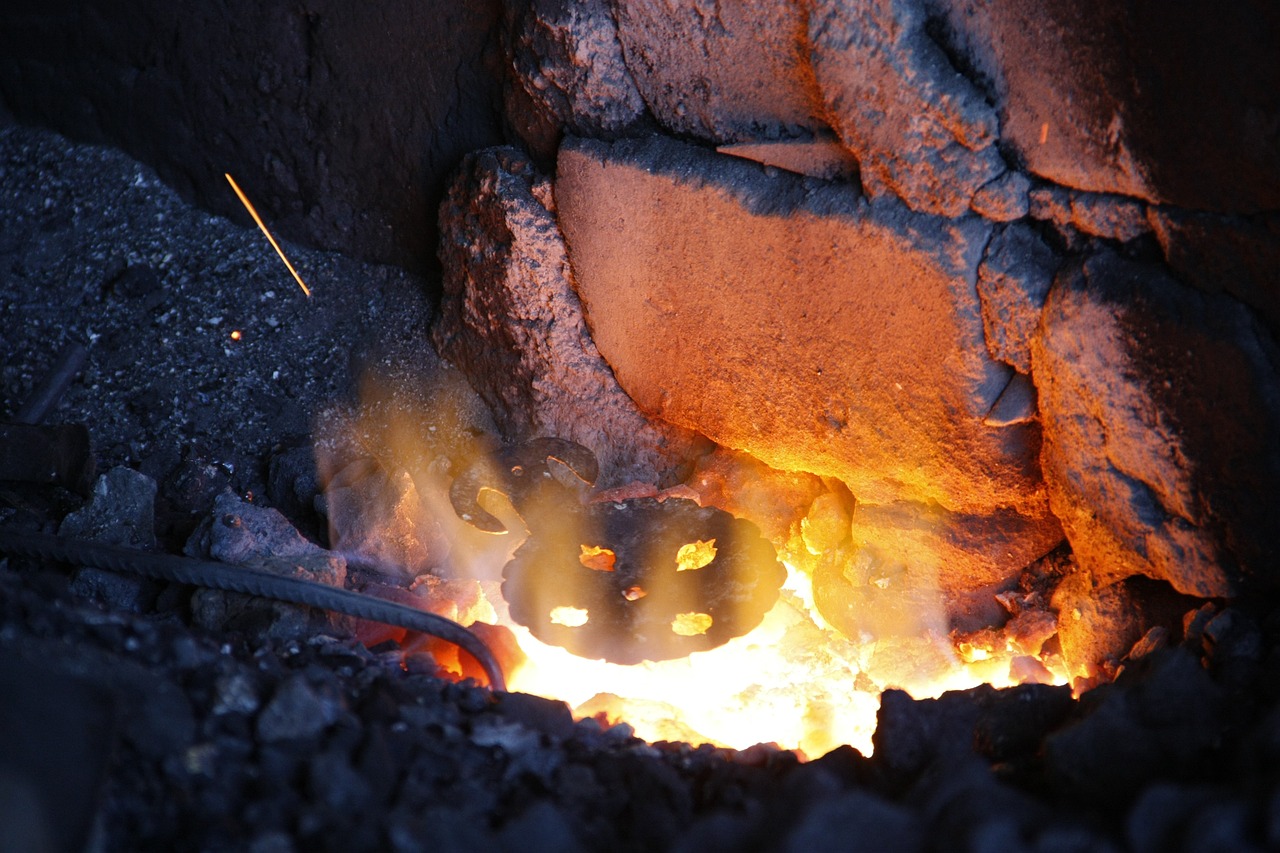
Walk into a working forge on a cold morning and the first thing that strikes you is not the heat but the rhythm. The bellows breathe, the coal cracks, and the hammer falls in a steady, unhurried pattern that has not changed in centuries. The tools are much the same as they were a hundred years ago: anvil, tongs, hardy, and a quench trough that steams when hot iron enters it. What has changed is the role the blacksmith plays in the community. The village smithy no longer shoes every horse in the parish, but it has found new purposes that keep the fire burning.
In many rural areas, the blacksmith has become a specialist. Some focus on architectural ironwork, forging gates, railings, and hinges for old buildings where modern fittings simply look wrong. Others repair farm machinery, straighten bent implements, or make one-off parts that no catalogue stocks. A surprising amount of the work is repair rather than creation. In a world of disposable goods, the forge is one of the few places where a broken object can be remade rather than replaced.
A Craft That Rewards Patience
Blacksmithing is not a skill that can be rushed. Iron must be heated to the right colour, worked while it is bright, and returned to the fire before it cools. A smith learns to read the metal by its glow, judging temperature by eye rather than instrument. This kind of knowledge is hard-won and deeply personal, passed down through apprenticeship or picked up slowly at evening classes and weekend courses. Many modern smiths came to the craft from completely different careers, drawn by the appeal of working with their hands and making something that lasts.
The forge itself is a study in economy. Nothing is wasted. Offcuts become hooks, nails, or decorative scrolls. The coal fire is banked at night and coaxed back to life in the morning. The anvil, often older than the smith by a century, carries the marks of countless previous owners, its surface dented and polished by generations of hammer blows. To work on such an anvil is to feel connected to a long line of people who did the same thing in the same way.
The Blacksmith in the Community
Today's rural blacksmith is often as much a teacher as a maker. Open days, school visits, and demonstrations at country fairs introduce the craft to people who have never seen hot metal shaped by hand. Many smiths take on apprentices or run short courses, and some work with heritage organisations to restore ironwork on old buildings, bridges, and canal structures. On the waterways, blacksmiths are frequently called upon to make mooring rings, bollards, and lock fittings that match the originals.
There is also a quieter role the forge plays. In villages that have lost their shop, pub, or post office, the blacksmith's workshop can become an informal gathering place, somewhere to drop in with a broken gate latch and stay for a chat. The fire is warm, the work is interesting, and the smith usually has a story or two. It is a small thing, but it matters. Rural life is held together by places like this, where skills are shared and neighbours are known. The blacksmith, far from being a figure from the past, is part of what keeps a village feeling like a village.