
 Once a common winter task across the British countryside, hedgelaying is enjoying a quiet revival among those who value living boundaries over wire fences.
Tracing the Towpath: A Slow Journey Along a Forgotten Canal Arm
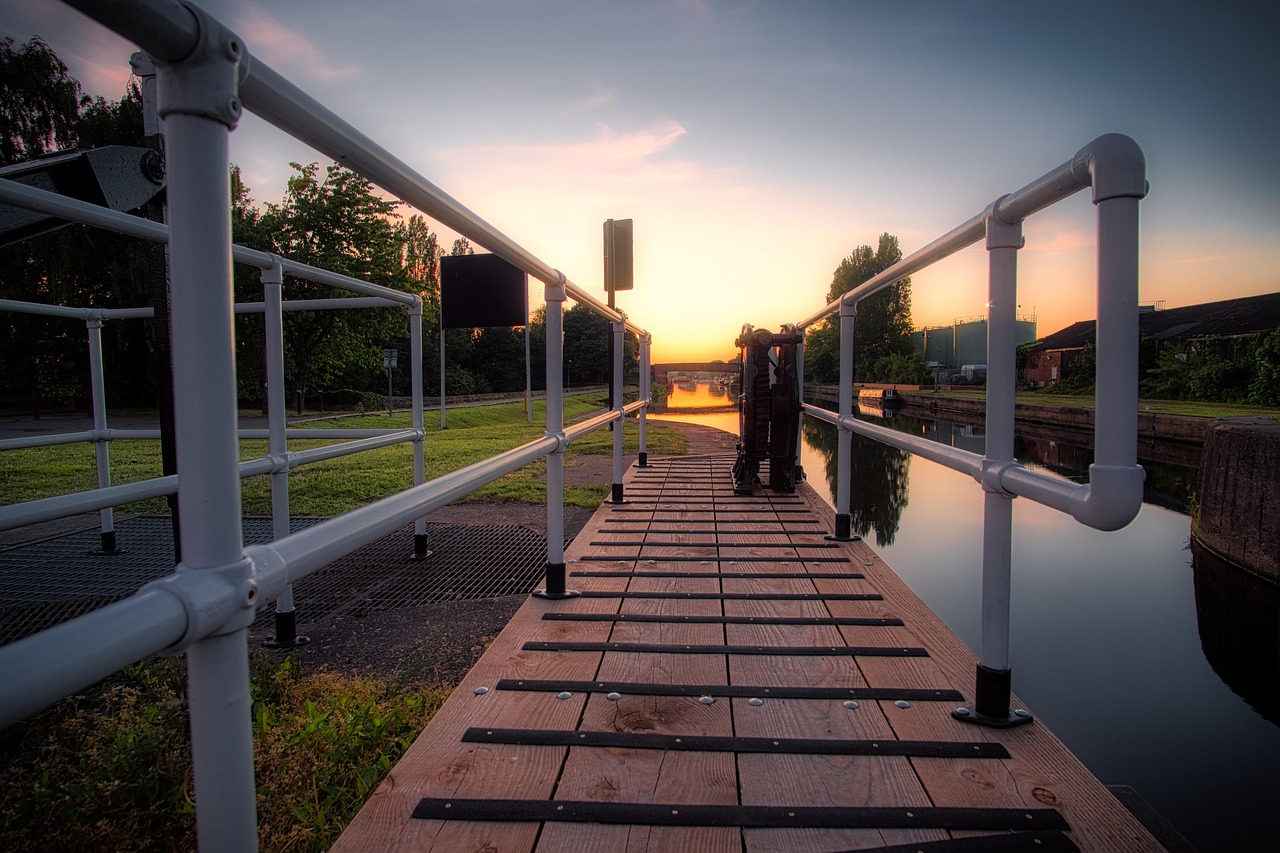
There is a particular kind of pleasure in walking a canal that no longer goes anywhere. The main line still carries narrowboats, but the arm — a short branch that once served a colliery, a mill, or a small town — has been left to nature. The towpath narrows, the hedges close in, and the water, if there is any, turns the colour of strong tea. You are walking through a corridor of history that most people pass without noticing.
Canal arms were the capillaries of the inland waterways system. They connected the trunk routes to the places that actually produced goods: coal pits, brickworks, lime kilns, timber yards, and market wharves. Some were only a few hundred yards long; others ran for miles. When railways arrived and later when road haulage took over, these branches were the first to close. Many were deliberately filled in, their locks dismantled, their bridges flattened. But traces remain for anyone willing to look.
Reading the Remains
The first clue is usually a change in the landscape. A line of trees that seems too straight, a hedgerow that runs at an odd angle to the field pattern, or a sudden dip in a pasture — these are the signatures of a filled-in canal. On the ground, you might find the stone coping of a wharf edge, now stranded in a field. A brick arch may survive under a farm track, its parapet worn smooth by decades of carts and tractors. Sometimes a lock chamber remains, its gates long gone, its walls holding nothing but nettles and old bricks.
Water is the great revealer. Where a canal arm still holds water, even if it is only a few inches deep, the shape of the channel is unmistakable. You can see the puddled clay lining on the banks, the remains of a stop gate, or the stonework of a culvert where a stream was diverted under the canal. In dry summers, the ghost of a canal can appear in a field as a darker line of vegetation, marking where the damp clay still holds moisture.
Walking these arms is not about covering distance. It is about paying attention. A single mile might take an hour if you stop to examine a wharf, trace the line of a siding that once carried coal wagons to the canal edge, or simply sit on a lock beam and imagine the boats that once worked here. The silence is part of the experience. On a busy main line, you are never far from an engine or a conversation. On a forgotten arm, the loudest sound is often a moorhen or the wind in the reeds.
What Restoration Means for These Lost Branches
Some canal arms have been restored, and the results can be transformative. A derelict branch becomes a destination for boaters, a wildlife corridor, and a focus for local pride. But restoration is expensive and complicated, especially where bridges have been removed or roads built across the line. Not every arm should be restored, and not every arm can be. Sometimes the most honest response is to keep the towpath walkable, clear the worst of the scrub, and let the rest remain as it is — a quiet ruin that rewards curiosity.
For the walker, the disused arm offers something increasingly rare: a route with no traffic, no waymarking, and no particular destination. You follow the water because it is there, and you stop when you have had enough. That is not a failure of ambition. It is the whole point.