
 Far from being a relic, the village blacksmith has adapted to a new role as repairer, teacher, and keeper of a very old set of skills.
The Watermill at the End of the Lane: How Rural Grain Mills Survived the Industrial Age
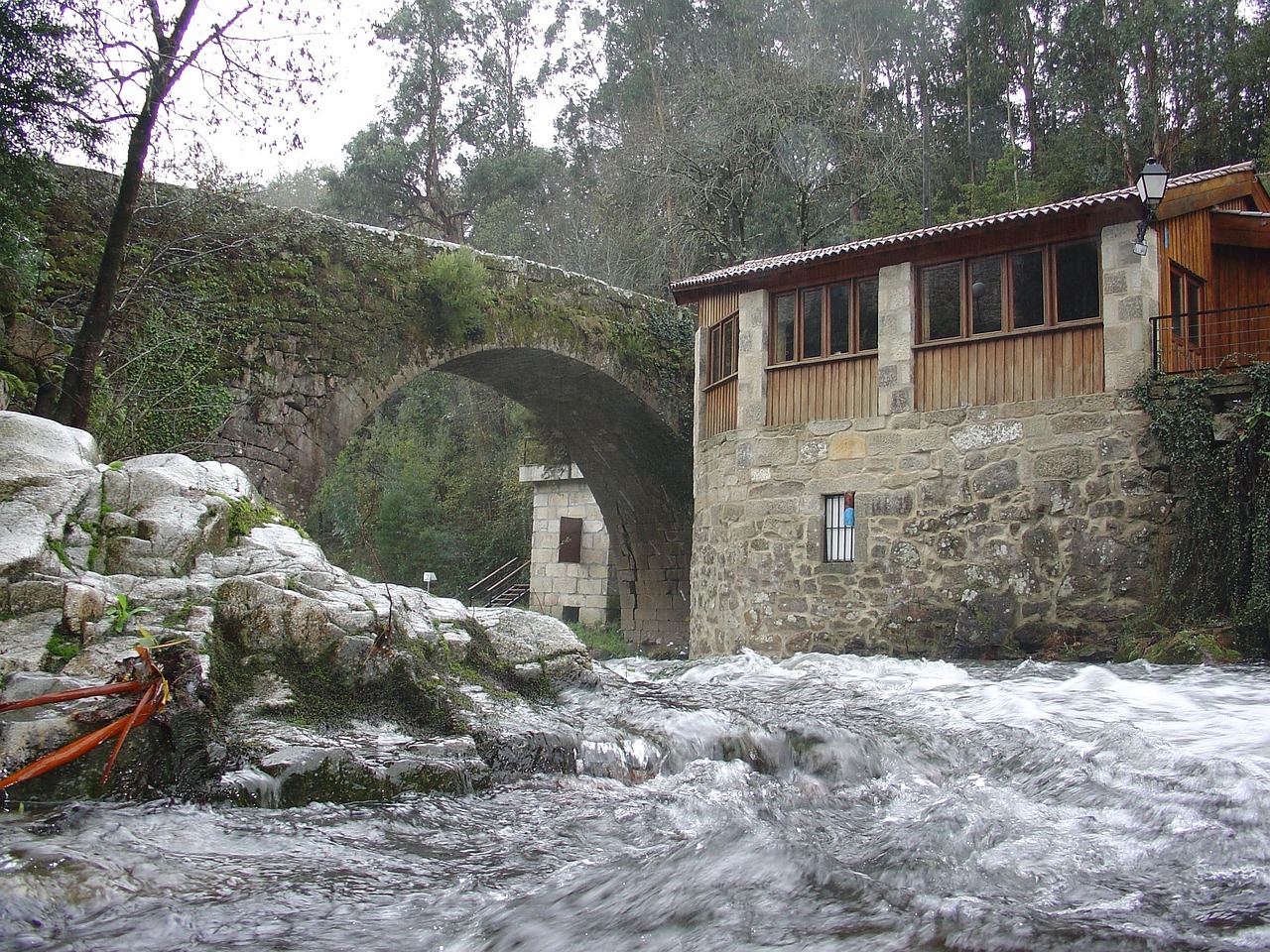
Every river valley seems to have one: a low stone building straddling a stream, its wheel motionless or turning slowly, moss creeping along the sluice gate. These small watermills were once the beating heart of rural life. Before railways and cheap coal, grain was ground close to home, and the miller was as essential as the blacksmith or the parson. A village without a mill was a village that had to haul its wheat elsewhere, often for miles over rough tracks.
What makes these buildings remarkable is how long they endured. Even as steam-powered roller mills in the cities began producing finer, cheaper flour in the nineteenth century, many country mills kept grinding for local customers. Some survived by diversifying — pressing oil, cutting timber, generating electricity, or simply serving as a store for animal feed. Others fell silent, their machinery left in place as if the miller might return at any moment. Today, a surprising number of these sites have found new life through restoration trusts, private owners, and communities unwilling to let the wheel stop for good.
The Machinery That Made a Village Self-Sufficient
To understand a watermill, you have to think vertically. Water enters at the top of the wheel — an overshot wheel uses gravity to fill buckets and turn the axle with remarkable efficiency, while undershot wheels rely on the current alone. That turning axle drives a series of gears, shafts, and belts that transfer power to the millstones on the floor above. The stones themselves are a marvel of geology and craft: French burr stone for the grinding surface, dressed by hand with a millstone pick to keep the furrows sharp.
The miller's day began before dawn and rarely ended before dark. Grain arrived in sacks, was weighed, hoisted up the mill, poured into the hopper, and ground between stones that had to be set precisely — too close and the flour would scorch, too far apart and it would be coarse. The resulting flour was sieved through bolts of silk or linen, and the bran returned to farmers for animal feed. Nothing was wasted. Even the water that left the wheel was often channeled to irrigate a meadow or fill a pond for ducks.
What strikes visitors to restored mills today is the noise and the dust. A working mill is not a quiet place. The stones rumble, the gears clatter, and a fine haze of flour settles on every surface. Volunteers who keep these mills running will tell you that the smell of freshly ground wholemeal is unlike anything from a supermarket shelf — warm, nutty, and faintly sweet.
Why These Mills Still Matter
The survival of rural watermills is rarely about nostalgia alone. Many have become small businesses again, grinding heritage grains for local bakers and brewers who want flour with character and a story. Others serve as museums, tearooms, or workshops where traditional skills are taught. The volunteers who maintain them are often the same people who repair dry stone walls and clear canal towpaths — practical custodians of a landscape that rewards attention.
There is also a quieter argument for keeping these mills alive. They represent a way of thinking about energy and food that is local, renewable, and modest in scale. A watermill does not demand a national grid or a global supply chain. It asks only for a stream, a wheel, and someone willing to learn how the whole thing fits together. In an age of complex systems, that simplicity feels less like nostalgia and more like wisdom.